-
FACTORING & SUPPLY CHAIN
- Factoring - Trade receivables
- Tax Receivables Purchasing
- Supply Chain Finance
-
LOANS
- Medium and long-term loans
-
LEASING & RENTAL
- Leasing
- Rental Ifis Rental Services
-
CORPORATE & INVESTMENT BANKING
- Financial Advisory/M&A
- Structured Finance
- Equity Investment
-
INTERNATIONAL
- Factoring import/export
- Import/export loans
- Other foreign banking services
-
BANKING SERVICES
- Current Account
- Time Deposit
-
OTHER SERVICES
- Insurance
-
Highlight Find out more







Logistics and Transport: How Can Growth Be Financed in a Constantly Evolving Market?
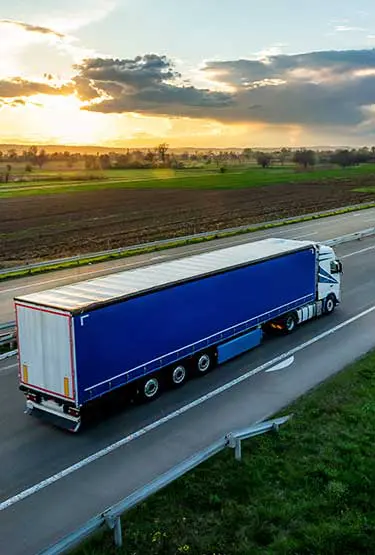

The logistics and transport sector is a vital link in Italy’s production chain and therefore needs appropriate support and tools to address market challenges. Indeed, given the geographical distribution of its industrial base, Italy remains heavily dependent on road transport. In this context, effective supply chain management, both financially and in terms of innovation, is essential. We explore these issues with Massimo Ferrara, Sales Manager at the Ancona Branch.
What are the main challenges facing logistics and transport companies today?
Logistics and transport companies today face global instability, rising raw material costs and an unavoidable technological transition. Their main challenges include:
- Supply chain disruptions: Events such as geopolitical tensions, disruptions to shipping routes, strikes and extreme weather make flows unpredictable and increase operational vulnerability, slowing the normal movement of raw materials, components, services and finished goods from suppliers to end customers.
- Rising costs and cost pressures: Steadily increasing fuel, electricity, labour and financing costs squeeze profit margins, while freight rates do not rise proportionately.
- Labour and driver shortages: Leading industry sources report significant difficulties in recruiting qualified personnel and road transport drivers.
- Sustainability and regulatory compliance (ESG): The need to reduce environmental impact requires investment in greener fleets, intermodal transport and compliance with new CO₂ emissions taxes.
- Digitalisation and automation: The transport sector also increasingly needs to harness artificial intelligence to analyse data and optimise routes and logistics operations.

How can logistics companies balance operational needs with future investments?
In the transport and logistics sector, which is characterised by long payment terms (30 to 90 days) and multi-tier subcontracting supply chains, liquidity management and factoring are key tools for ensuring business continuity and financing growth.
Transport companies must cover immediate operating costs (fuel, motorway tolls, vehicle maintenance and salaries) on a daily basis, while revenues are collected much later. Constant monitoring of working capital helps prevent sudden liquidity crises caused by peaks in activity or delays in payments along the supply chain.
In this context, factoring can be a valuable ally. Under a factoring agreement, a company assigns its trade receivables (invoices) to a specialist company or bank (the factor) to obtain immediate liquidity. The main arrangements include:
- Recourse factoring (pro solvendo): The transport company retains the risk of customer non-payment, while benefiting from any advances against its receivables.
- Non-recourse factoring (pro soluto): The factor assumes the full risk of non-payment by the customer/debtor.
- Reverse factoring: Initiated by a major buyer (such as a large logistics hub or mass-market retailer) to ensure prompt payment to its road haulage suppliers.
What solutions can support the sector’s transformation?
To support structural investments such as fleet renewal, the green transition and electric vehicles, and warehouse automation, logistics companies can combine factoring with:
- Leasing and rental of vehicles and equipment: Leasing enables companies to acquire business vehicles and equipment without tying up their own capital. Benefits include tax advantages, deductibility of lease payments and VAT deductions depending on the actual use of the vehicle, as well as flexible arrangements for contract duration, down payments, purchase options and insurance or additional services.
- Rental: Rental provides a fixed, predictable monthly fee without tying up capital. With insurance and safety coverage, it is particularly suitable for technology-intensive assets (which therefore become obsolete quickly), allowing companies to keep pace with increasingly fast-moving and dynamic processes.
- Dedicated financing: Medium- to long-term financing solutions supporting sustainability and technological innovation across the supply chain, with multi-year terms tailored to business needs.
Advertising message for promotional purposes. For the contractual conditions of the illustrated product, refer to the information sheets available at our branches and in the Transparency section of the websites www.bancaifis.it